Yeah, Yeah, I know. I'm not blogging here any more, right? I'm especially not writing daily posts here. I already have threeotherplaces I can do that. Well so what? Today I feel like writing it here, so ::raspberry sound here::
Today I'm blogging with WordPress, taking notes using jrnl, and keeping my task list in "Super Productivity"…on Linux. Things sure are weird. :)
All of this nonsense attacks the foundation of photography. Photographers spending four hours adjusting color are making images that don’t look real. Light simply does not do what they are making it do.
I've been guilty of this, but no more. These days I hardly touch the originals. I've learned that excessive post-processing adds very little and certainly doesn't turn a bad photo into a good one.
At some point, for some reason, Zen changed the New Tab behavior when opening new tabs:
NEW TABS HAVE BEEN REMOVED, instead we are opting for opening the URL bar and then pressing enter to open a new tab ('zen.urlbar.replace-newtab' to false in about:config to revert)
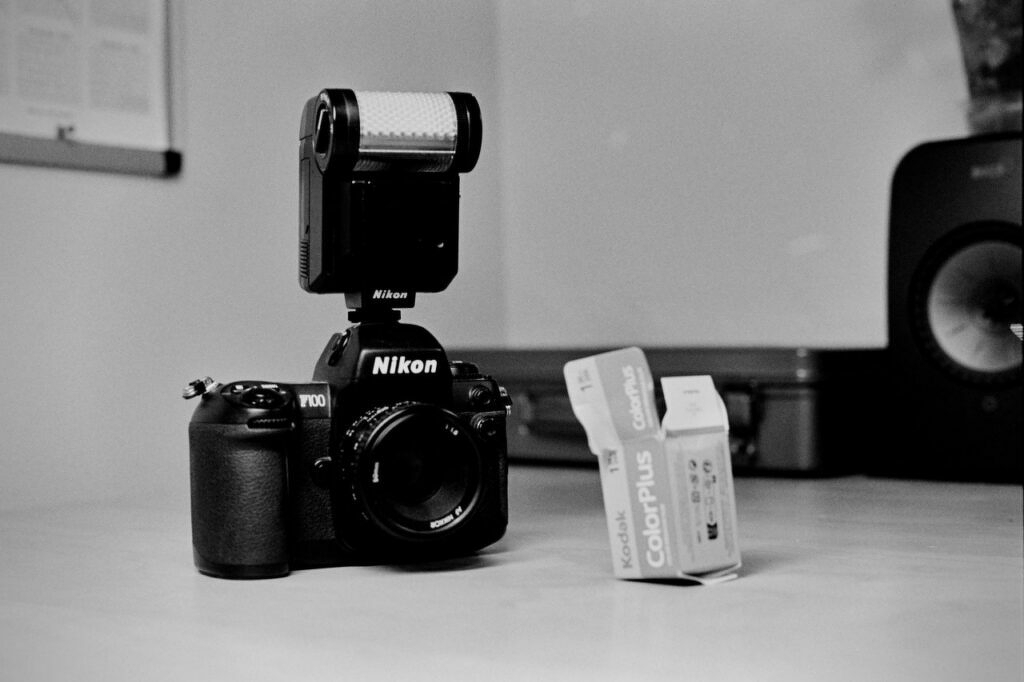
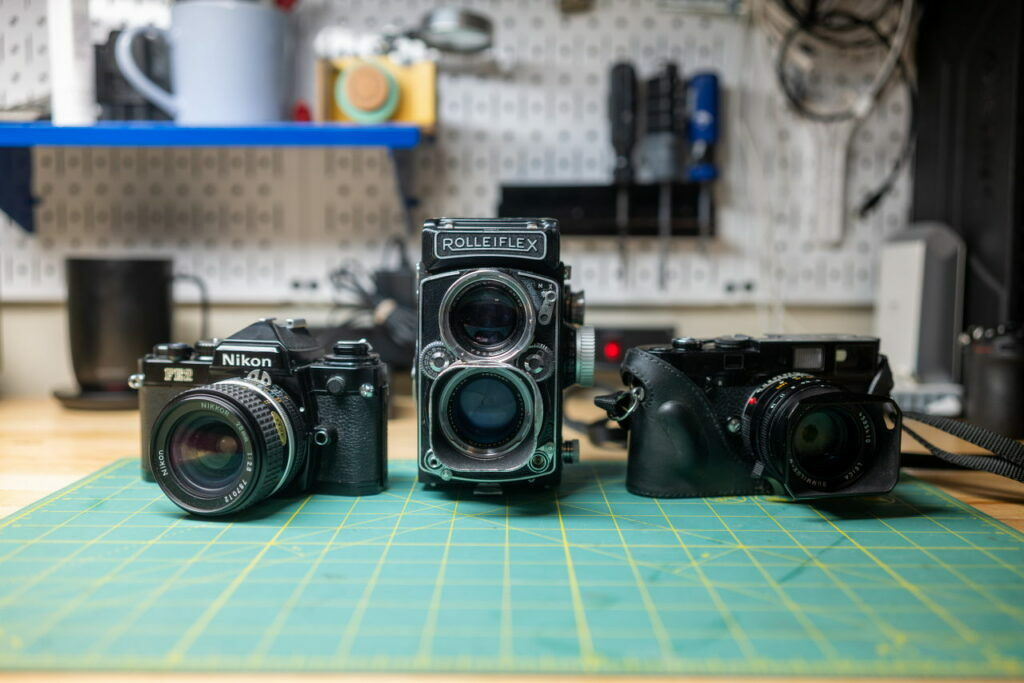
I'm becoming a fan of this awkward kit. The F100 is such a sleeper and can be had relatively cheaply. I ended up with that weird-looking SB-20 flash as part of a local Facebook purchase. There might be something to this TTL flash, auto-focus, auto-exposure photography thing.
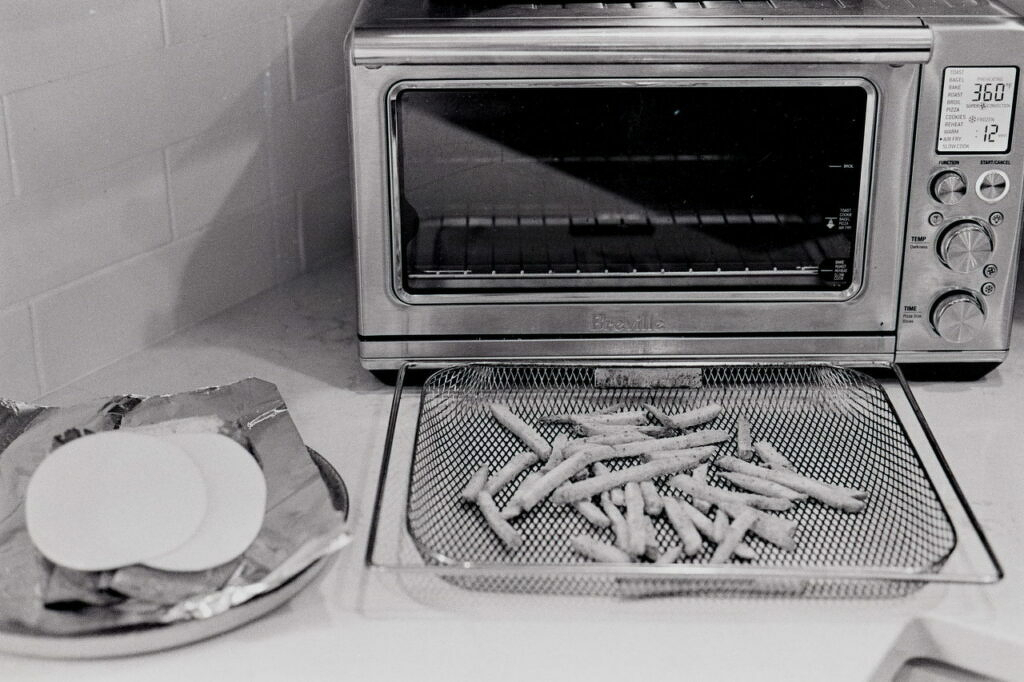
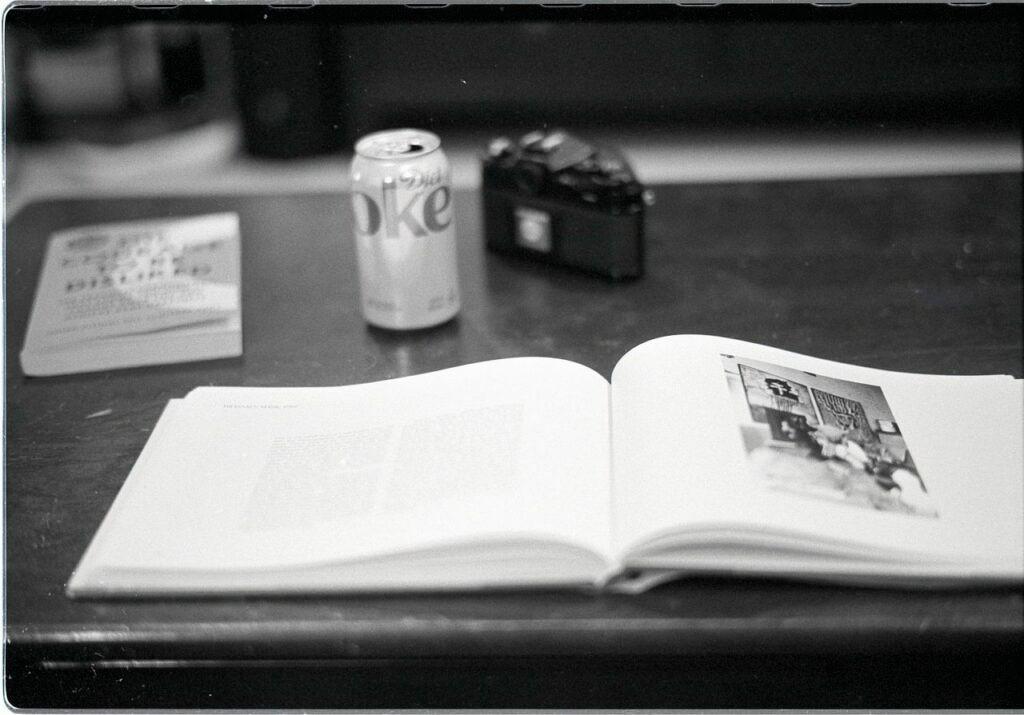
About to make Checkers fries in toaster oven / Nikon F100, HP5.
It's weird how I spend a few days relaxing in WordPress, then I wake up one day and think, "Maybe I'll generate my whole website with Org-mode and Emacs!" I probably won't do that, but I sometimes consider it.
I don't want photography be just another kind of file to play with on the computer.
STATUS: An entire day to myself with no other obligations. ::rubs hands together and laughs maniacally::
TODO: I'll probably fart around more in Darktable. Maybe even hit the darkroom to make a few prints.
My therapist asked me why I thought it was a problem to have so many blogs/cameras/notebooks/etc. and I couldn't give her a good answer. It often feels like a problem, but is it? Maybe not. Maybe I'm just having fun and that's fine.
I'm using WordPress lately because it's easy and I don't have to think about anything but the typing. Images are easy to add and it can do fancy things when it needs to. Sure, it's a bit bloated and janky, but if what I do most of the time is hit "New post" and write, who cares?
I swear to god if I see one more person accuse someone else of being "complicit" with one evil group or another because they happen to use a product that is somehow remotely tangental to that group I'm going to become complicit. Fuck off.
STATUS: Sleep: Up at 4:00 am, as usual. I'm trying to settle in to using WordPress for the daily posts. I don't know if it will stick.
TODO: Visit daughter and grandson. Babysit for a couple hours.
READING: Continued "The Tools"
LISTENING: to my wife's workout channel coming from the next room.
I have so many great cameras, and I have the free time to use them. Yet I've barely been taking any photographs. Why is that? I'd love to figure it out.
I wake up every morning wondering who I'm going to be that day.
STATUS: Weight: down. Sleep: Dunno, the Pebble said 1.5 hours which is a bit off
TODO: Therapy, groceries, maybe clean the closet
WATCHING: Bingeing the 3rd season of "The Diplomat"
An in-depth look at the currently trending Arch Linux configuration that is Omarchy.
They make some fair points, but to me they are mostly, uh, beside the point. I've tried switching to Linux with a dozen or so different distributions. I didn't enjoy any of them. I enjoyed just about everything about Omarchy right out of the box, which is the point. If it weren't for this cobbled together configuration with its questionable security and fragile bash scripts, I wouldn't be using Linux.
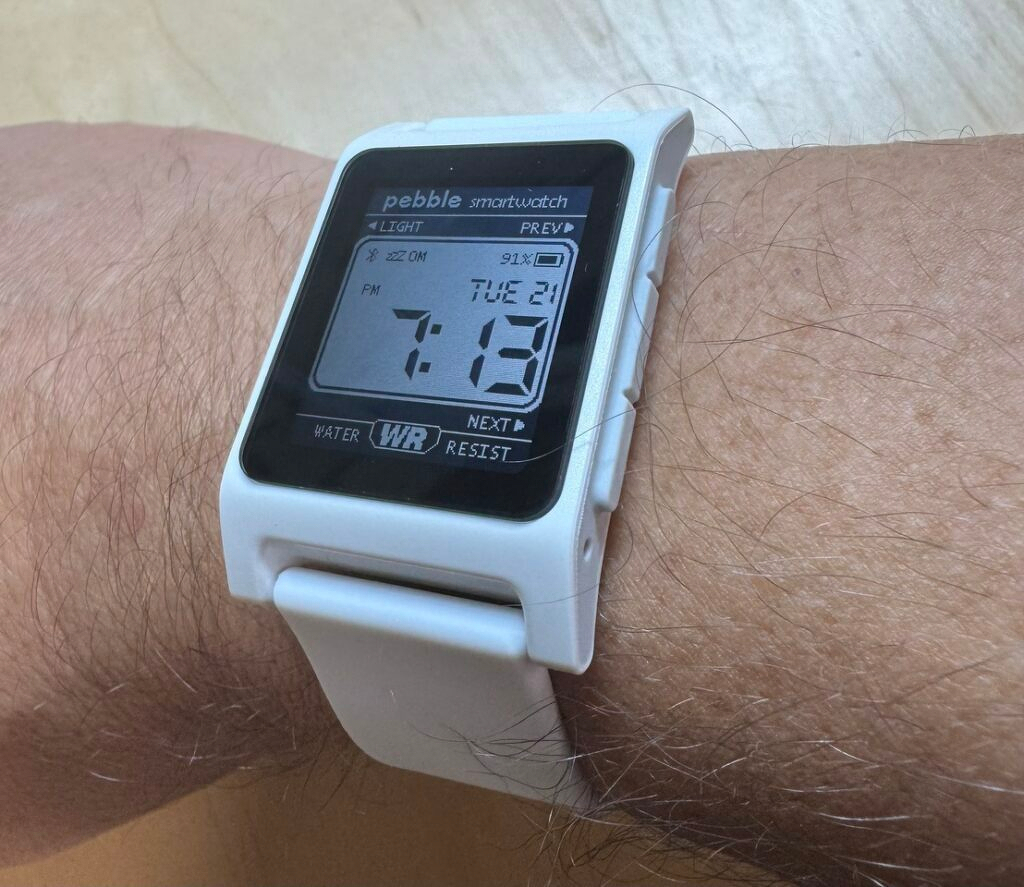
I impulse ordered the new Pebble smartwatch as soon as it was announced. At the time, I was looking for excuses to stop wearing my Apple Watch, and this seemed as good as any.
The watch arrived yesterday. It's very white :). There was no setup to speak of other than downloading the app so I can pick from thousands of faces. That should keep me busy for a while. I love e-paper screens.
I haven't spent much time playing with everything, but I feel like we'll get along fine. My only complaint is that there's no way to rotate the display so that (as a lefty) I can comfortably use the watch on my right wrist.
The only thing I've done is to add a Timer app and assigned it to a long press of the middle button. Time, weather, notifications, and timers are my primary uses for a smartwatch, so I'm covered.
I've started a new document for today in at least 4 places this morning: Here in WordPress, on Baty.net, in my Org-journal, and in my Denote daily note. I'll probably add one to the wiki at some point, too. Funny thing is that the only ones I feel are redundant are this and baty.net's version. This morning I'm feeling like writing here, so, good morning!
I'm trying to spend as little time as possible on any social media. I'm finding it difficult. My brain wants new things to chew on, and I'm too lazy to work on anything for more than a few minutes at a time.
Whenever I used to see someone with an Android phone or some "knock-off" Apple Watch, I would think, "That poor sap probably doesn't know any better". These days, I think, "Good for you!"
DOING: Reviewing my subscriptions and canceling as many as I can. Mostly macOS software so far.
(re)WATCHING: Fleabag
LISTENING: Helix, "Walkin' the Razor's Edge" on cassette
But the most interesting designs to me are when design changes your behavior. Even the smallest details can change how someone interacts with something.
The past month has been a whirlwind of new tech stuff for me. I bought 2 new computers to run Linux, so I've been learning to adapt my workflow to an entirely new environment. This means that just about everything in my computing life has changed.
I have a new NAS, and moved everything from the Mac Mini server to the NAS. This meant learning more Docker and understanding how to do things on the UGREEN OS.
I've been playing with a few new TUI apps for things like Taskwarrior and Mutt and LazyGit. So basically I've been fighting text files for a month and I'm bored with it.
It feels like I've hit a wall with all this. I need a break, which might be why I'm typing this here in WordPress using my browser instead of a Markdown file in Emacs for Hugo.
Also, my paper notebooks are getting some use. Maybe I should go for a walk.
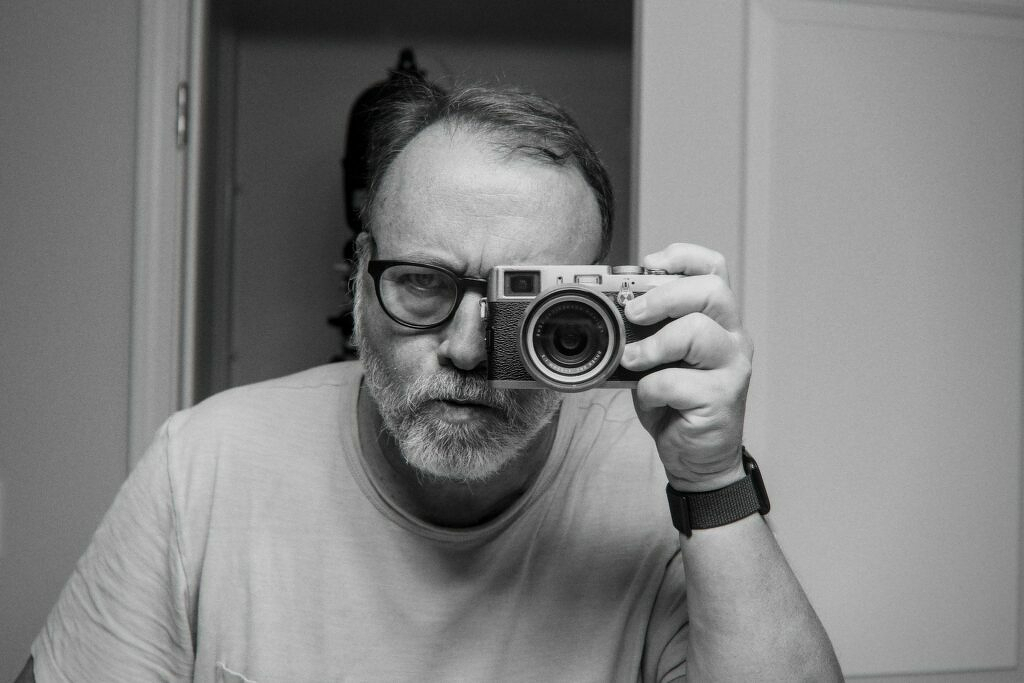
Sometimes I get bored and try distracting myself with some lesser-used camera or process. This time, it's the original Fujifilm X100 with the old Monochrome preset. Processed in Darktable because I'm a masochist.
Whenever I stop by here and look at the blog I think, "Well that's kind of nice, actually." Then I consider moving my blogging here (again). But also, I know me and it never sticks. And yet, it's still here.
I quite like how the theme looks and works. I like being able to just drag in images and have everything done for me. I like built-in analytics and comments. I like that there's a massive ecosystem. I like that I can switch themes with ease when I get bored. I like that when I spot a typo I can fix it right in place.
I don't like Gutenberg. I don't like how janky the control panel feels. I don't like every plugin trying to upsell me constantly. I hate the "Site Editor". Have I mentioned that I don't like Gutenberg? I don't like that my stuff is all out there and buried in a database.
The pros always outweigh the cons...for a few weeks at most. Then, the cons really start to eat at me. That's what's happening now. I copied many of the posts from the past couple of weeks here and added them to the Hugo blog at baty.net.
So, I may go back there, and leave this one idling for when I get the itch to write somewhere new.
The appeal of cynicism is that it makes you sound smart without asking for a whole lot of independent thought. It's easier to tear down than build up, to assume the worst than to evaluate evidence, to sneer than to engage, to smirk rather than smile.
I’ve spent a while getting my head around Darktable and digiKam. That’s no small feat, honestly. What weird software. It’s capable, but getting to where I was with Lightroom Classic, Photoshop, and sometimes Capture One has been elusive.
There are manuals, blog posts, and Youtube videos to consume, but, given the nature of Darktable, everyone tells me to do things differently. There are a dozen ways to accomplish every task. Which one’s best? Who knows!?
Converting film negative scans it what I’m struggling with most. Lightroom has Negative Lab Pro, which is sort of de facto standard at this point. It makes quick work of conversion, adjustments, and metadata handling. Darktable has Negadoctor, which remains a mystery to me. I’ve used it to convert three rolls, and I’m getting the hang of the process, but I still can’t get the look I want from them. Everything’s a tad muddy, no matter how much I futz with the 175 available sliders.
One thing I’ve learned is that the Framework is slower than the little Beelink with Darktable. That means the Beelink stays as the main desktop. I thought for a second I could use the Framework for both, but not if I’m going to be processing photos with it.
I’ll give it until the end of October to see if I can forego the Mac entirely.
That’s not entirely fair. Wallace’s most famous book, Infinite Jest—1,079 pages and weighing 3.15 pounds (in the hardcover first edition)—is challenging. But Wallace wrote many other things, and some of them are quite accessible.
I hope that reading and talking about DFW makes a comeback. For a while there, Book Social Media was (rightfully) aligned against sound-smart lit-bros who wouldn't shut up about Infinite Jest. I may have been one of them, because I loved (and still love) that book, so shut up.